




When to Take Calcium Tablets: Morning or Night?

Introduction
Taking care of your health can feel like solving a puzzle. You have all the pieces. The vitamins, the gym shoes, the green tea. But still, you are not always sure how they fit together. If you are wondering when to take your calcium tablets for bones in Pakistan, we’ve got your answer. The best time depends on the type of calcium you have.
But generally? It is best to take it in small doses twice a day. Once with breakfast and once with dinner. Calcium isn't a "one and done" kind of mineral. Our bodies are picky. They can only handle a certain amount at once. So needless to say, the timing is everything. Let’s look at how to make this ritual work for you.
Best Time to Take Calcium Tablets for Bones in Pakistan
The most important rule of calcium is the 500 mg limit.
Your body is kind of picky when it comes to calcium. It can only handle about 500 to 600 mg at a time. So if your doctor says, “Take 1000 mg a day,” that doesn’t mean dump it all into breakfast like you’re filling a tiny cup with a bucket of water. Most of it will just overflow and leave your body saying. A smarter approach is to split it up. Morning and evening. Take a snack in between too. So your body can actually use it instead of letting it run down the drain.
Morning vs. Night
- The Case for Morning: Many people find it easiest to remember their supplements First thing. If you take Calcium Carbonate, you must take it with food. The stomach acid produced during a meal helps break the tablet down.
- The Case for Night: Some studies suggest that bone breakdown happens more quickly at night. Taking a dose with dinner may help keep your levels steady.
The Split Method
For the best results, split your dose.
Take half in the morning & half in the evening. This gives your body two chances to absorb the mineral fully.
Pros and Cons of Taking Calcium Tablets: Day vs. Night
Taking Calcium During the Day
Pros:
- Better absorption because food boosts stomach acid.
- Easy to remember when paired with breakfast or lunch.
- Supports muscle function and subtle energy throughout the day.
- Less chance of digestive discomfort like bloating or cramps.
Cons:
- Busy mornings make it easy to forget.
- Coffee, tea, or iron tablets can reduce absorption.
Taking Calcium at Night
Pros:
- Bones do most of their repair while you sleep.
- Evening routines make it easier to remember your dose.
Cons:
- Less absorption if taken on an empty stomach.
- Can cause bloating or constipation for some people.
- May interfere with medications like thyroid or other prescriptions.
Factors Affecting Calcium Absorption
Getting calcium into your system is a team effort. It requires the right environment & the right partners to work.
Vitamin D: The Essential Partner
You can take all the calcium in the world. But it won't do much without Vitamin D. Think of Vitamin D as the key that opens the door to your bloodstream.
Without it, the calcium just passes through your system.
Many people choose a "Cal-Mag-D" supplement to ensure they have all the necessary components in one pill.
The Type of Tablet
Not all calcium is created equal. The two most common forms behave very differently in your stomach:
| Feature | Calcium Carbonate | Calcium Citrate |
|---|---|---|
| Food Requirement | Must be taken with a meal. | Can be taken on an empty stomach. |
| Acid Level | Needs high stomach acid. | Works well even with low acid. |
| Cost | Generally cheaper. | Usually more expensive. |
| Common Brands | Tums, Caltrate. | Citracal. |
Best Calcium Supplements Available Online & In Stores
Choosing a calcium supplement can feel oddly overwhelming. There are so many options. And they all promise stronger bones and better health. The key is not finding the strongest supplement. But the one that actually fits your needs and that you’ll stick with.
Nutrix Health Care offers a range of calcium and vitamin D products that cover most real-life situations. Here’s a quick comparison to make things clearer.
| Product | Form | What It Contains | Best For |
|---|---|---|---|
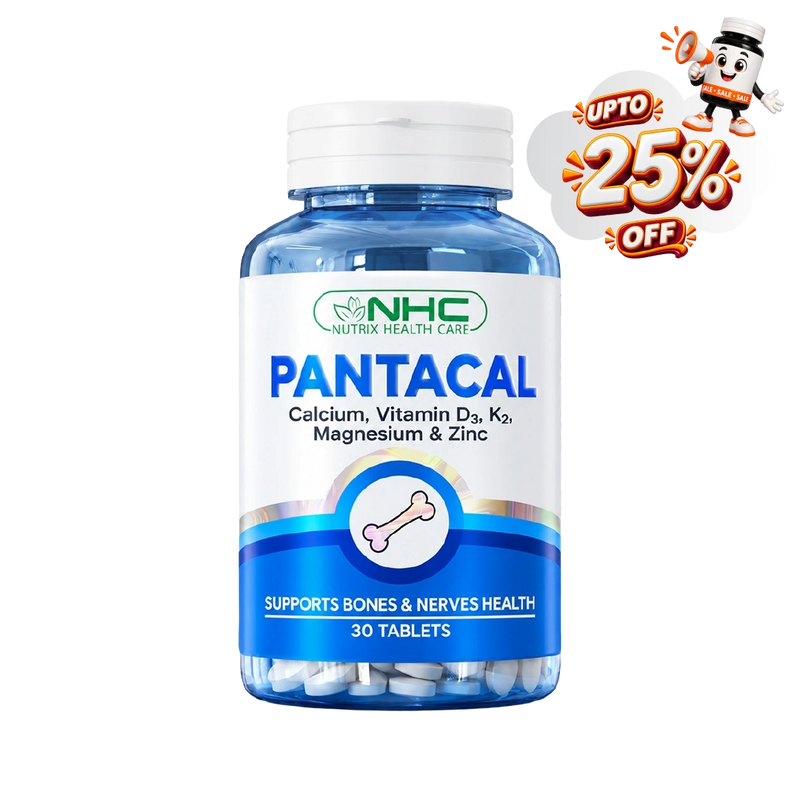
| Pantacal Tablets | Tablet | Calcium, Vitamin D3, Vitamin K2, Magnesium, Zinc | Adults, seniors, bone health support |
| Pantacal Bone Support Bundle | Tablets (Value Pack) | Same nutrients as Pantacal Tablets | Long-term daily supplementation |
| Apic Chewable Tablets | Chewable | Calcium, Vitamin D3 | Children, teens, tablet-sensitive adults |
| Chol-D | Capsule | Vitamin D3 | Vitamin D deficiency, calcium absorption support |
Now let’s talk about what these mean.
Pantacal Tablets are ideal if you want a complete solution. Instead of taking multiple supplements, you get calcium plus the nutrients that help it work properly.
- Vitamin D3 improves absorption,
- Vitamin K2 helps direct calcium into bones,
- Magnesium supports muscle function,
- Zinc plays a role in bone repair.
It’s a solid daily option for adults. Especially women after menopause. Or anyone thinking long-term about bone health.
If consistency is your challenge, the Pantacal Bone Support Bundle makes life easier. It’s the same formula… just packaged for extended use. No frequent reordering. No gaps. And when it comes to calcium, gaps matter more than people realize.
For children or anyone who simply hates swallowing tablets, Apic Chewable Tablets are a good alternative. They deliver calcium with vitamin D3 in a form that’s easy to take and easier to remember. This alone can make a big difference in growing years.
Chol-D plays a supporting role that shouldn’t be underestimated. Calcium doesn’t work without enough vitamin D, and deficiency is common in Pakistan. Pairing Chol-D with a calcium supplement can improve results.
Common Mistakes to Avoid When Taking Vitamin D and Calcium Tablets in Pakistan
Vitamin D and calcium supplements are widely used. But they are also widely misunderstood. Many people take them regularly and still don’t see results. Not because the supplements don’t work, but because of how and when they’re taken.
Small mistakes add up. Here are the most common ones to avoid.
- Not paying attention to the best time to take multivitamins
Multivitamins and mineral supplements are not meant to be taken randomly.
Calcium and vitamin D are generally better absorbed when taken with meals, especially meals that contain some fat.
Taking everything at night or on an empty stomach may reduce absorption and cause digestive discomfort.
- Taking vitamin D at the wrong time of day
Many people ask about the best time to take vitamin D. And the answer is simpler than expected.
Vitamin D is best taken earlier in the day. Ideally, with breakfast or lunch.
Taking it very late at night may interfere with sleep in some people and doesn’t improve absorption.
- Doubling doses because results feel slow
Vitamin D and calcium work quietly and gradually. Increasing doses without guidance does not speed things up.
In fact, excess intake can cause side effects like nausea, constipation or high calcium levels in the blood.
More is not better. Consistent and correct dosing is.
- Ignoring food combinations
Calcium absorption can be affected by what you eat. Very high-fiber meals, excessive tea or coffee and iron-rich supplements taken at the same time can interfere with absorption.
Spacing supplements away from these helps your body use them more efficiently.
- Overlooking consistency
Even the best vitamin supplements won’t work if they’re taken irregularly.
Skipping days or taking supplements only when symptoms appear reduces long-term benefits. Bone health depends on steady intake over time.
- Expecting immediate results
Vitamin D and calcium are preventive nutrients. They support bone density, muscle function & overall health slowly.
If you’re looking for instant relief, you’ll likely be disappointed. The benefits show up over weeks and months. Not days.
- Assuming all supplements work the same way
Different vitamins have different absorption rules. Understanding the best time to take vitamin D versus calcium or multivitamins makes a noticeable difference in how well they work.
When taken at the right time, in the right way, vitamin D and calcium can be extremely effective. Most problems don’t come from the supplements themselves. But from the small habits around them.
Conclusion
At the end of the day, the goal is to keep your bones strong. This way, you can keep moving through the world with ease.
To keep it simple: split your dose. Take one tablet with your breakfast and another with your dinner. This ensures your body isn't overwhelmed. And it will actually use the nutrients you're giving it.
Consistency is very important. More important than perfection. Pick a time that fits into your daily life and stick to it. And make sure you’re getting enough Vitamin D to help the process along. Your bones are the quiet framework of your life. Taking a moment to support them is one of the best gifts you can give yourself. Feel free to contact Nutrix Health Care to get reliable calcium tablets for bones in Pakistan.
FAQ Section
Is it okay to take calcium before you go to bed?
It’s okay to take calcium before bed. But it’s best to take it with some food. On an empty stomach, your body won’t absorb it as well. And it might cause mild stomach discomfort. Splitting your daily dose between morning and evening can improve absorption.
What are the early signs of calcium deficiency?
Your body uses your bones as a storage bank. If it doesn't get enough calcium from your diet, it "withdraws" it from your bones.
You might notice:
- Muscle cramps or spasms. Especially in the legs.
- Weak or brittle fingernails.
- A tingling sensation in your hands or feet.
- Small dental issues. Like weakened tooth enamel.
References
health.com/calcium-and-vitamin-d-11882008
healthline.com/nutrition/calcium-supplements
healthline.com/nutrition/build-healthy-bones
